
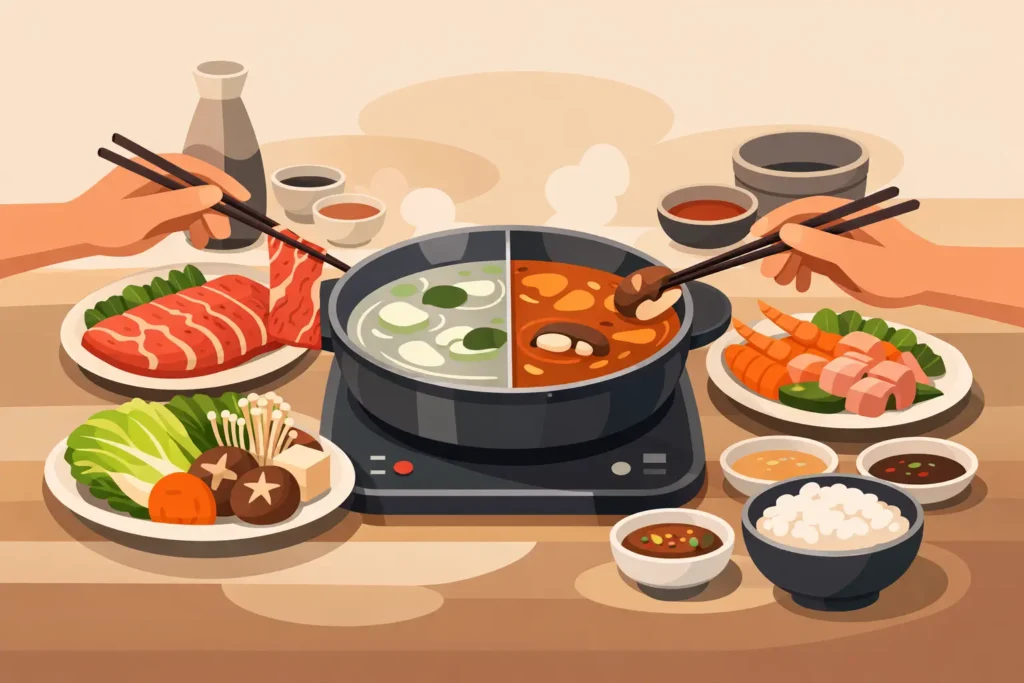
That first moment when a tray of beautifully sliced beef hits the table, the broth starts to simmer, and everyone leans in to cook their next bite – that is usually when people stop asking what is shabu shabu and start wondering why they did not try it sooner.
Shabu shabu is a Japanese hot pot meal built around thinly sliced meat, fresh vegetables, noodles, and dipping sauces cooked right at the table in hot broth. It is interactive, customizable, and surprisingly approachable, even if you have never had Japanese hot pot before. Instead of ordering a finished plate from the kitchen, you cook each bite the way you like it, which is part of what makes the experience feel both elevated and relaxed.
For diners who want something more engaging than a standard dinner out, shabu shabu delivers that sweet spot. It feels social without being complicated, premium without being stiff, and fresh without sacrificing comfort.
What Is Shabu Shabu?
At its core, shabu shabu is a communal or individual hot pot style from Japan. The name comes from the swishing motion used to cook thin slices of meat in simmering broth. You pick up a slice, swish it through the pot for a few seconds, and it cooks almost instantly.
That simple method is the heart of the meal, but the full experience includes much more. A typical shabu shabu setup includes broth, thinly sliced beef or other proteins, vegetables, mushrooms, tofu, noodles, and sauces for dipping. Each ingredient cooks at a different pace, so the meal unfolds naturally rather than arriving all at once.
This is one reason shabu shabu appeals to such a wide range of diners. Some people love the premium beef. Others come for the variety of vegetables and the lighter feel compared with fried or heavily sauced dishes. For many groups, it is the shared experience that makes it memorable.
How Shabu Shabu Works at the Table
The format is easy to learn. Once your broth is simmering, you add ingredients a little at a time. Thinly sliced meats cook in seconds. Leafy greens soften quickly. Mushrooms, tofu, and noodles take a little longer, but still fit the relaxed pace of the meal.
The beauty of shabu shabu is that you stay in control. Want your beef just barely cooked and tender? Swish it briefly. Prefer your vegetables softer and more infused with broth? Leave them in a bit longer. That flexibility makes the meal feel personal in a way that traditional restaurant dining often does not.
At a premium hot pot restaurant, the experience becomes even more rewarding because the ingredient quality really shows. Thin slices of Black Angus Prime, Australia Wagyu, or Japanese A5 beef do not need much to shine. A quick pass through hot broth is enough to highlight texture, richness, and flavor without masking what makes the cut special.
What You Eat in Shabu Shabu
Most people think of beef first, and for good reason. High-quality beef is one of the biggest draws of shabu shabu. Because the slices are so thin, each bite cooks fast and stays tender. Richer cuts bring more marbling and depth, while leaner options feel lighter and cleaner.
Seafood can also be part of the meal, along with chicken or pork depending on the menu. Then there are the vegetables, which are not just filler. Cabbage, leafy greens, mushrooms, carrots, onions, and tofu all absorb the broth differently, giving the meal variety from one bite to the next.
Noodles usually come later in the meal, after the broth has picked up flavor from everything cooked in it. That last stage is one of the quiet pleasures of shabu shabu. The broth becomes more layered over time, so the noodles often taste richer than you would expect from something so simple.
Why the Broth and Sauces Matter
Shabu shabu is not about one heavy flavor. It is about balance. The broth sets the tone, whether it is light and clean, savory and rich, or something with more spice. Because diners often have options, the meal can feel tailored to different tastes at the same table.
Dipping sauces are just as important. They add contrast and let you fine-tune each bite. Some people want a brighter, tangy sauce to cut through richer beef. Others prefer something nuttier or more savory. The result is a meal that feels highly customizable without being overwhelming.
That customization is a big part of the appeal for American diners. Not everyone at the table wants the same thing, and shabu shabu makes room for that. One person can focus on vegetables and tofu, another can build the meal around premium wagyu, and both still feel like they are sharing the same experience.
What Shabu Shabu Tastes Like
If you have never tried it, you might expect something bold and heavily seasoned like some other hot pot styles. Shabu shabu is usually more refined than that. The flavors are cleaner, and the quality of the ingredients matters more because there is less hiding behind sauce.
That does not mean it is bland. It means the meal is more ingredient-driven. A beautifully marbled slice of beef tastes rich and buttery. Fresh greens bring a crisp, earthy contrast. Mushrooms add depth. The broth ties everything together, and the sauces let you shift the flavor profile from bite to bite.
For diners who want a meal that feels satisfying but not overly heavy, this is a big advantage. Shabu shabu can be indulgent, especially with premium cuts, but it can also feel balanced and fresh.
Why People Love the Experience
Part of the answer to what is shabu shabu is not just what it is, but what it feels like. It turns dinner into an activity. You are not waiting through long gaps between courses or rushing through a plate before it cools. You are cooking, tasting, talking, and adjusting as you go.
That makes it especially good for date nights, family dinners, and group gatherings. It gives people something to do together without forcing the moment. The table stays lively, and the pace feels natural.
There is also a sense of control that many diners appreciate. You decide what to cook next, how long to cook it, and how to build each bite. For people who care about freshness, portion control, or simply getting exactly what they want, that is a real benefit.
Is Shabu Shabu Healthy?
It can be, depending on how you build your meal. Shabu shabu often includes lean proteins, a wide range of vegetables, and broth-based cooking instead of deep frying or heavy oil. That gives it a lighter reputation than many comfort foods.
At the same time, it depends on your choices. Rich, heavily marbled beef is absolutely part of the appeal, and some sauces can add extra richness or sodium. The good news is that the format gives you options. You can go all in on premium wagyu for a special occasion, or build a more balanced meal around vegetables, seafood, and lighter cuts.
That flexibility is one of the reasons the style works for so many people. It can feel celebratory, health-conscious, or somewhere in between.
What Is Shabu Shabu Like for First-Timers?
For first-time guests, the best news is that shabu shabu is easier than it looks. You do not need expert chopstick skills or deep knowledge of Japanese cuisine to enjoy it. Once the broth is hot, the process becomes intuitive fast.
Start with a few vegetables, then cook a slice or two of meat. Taste the broth. Try the sauces. Notice how different ingredients change the flavor over time. Within minutes, most people settle in and realize the meal is less about rules and more about preference.
A great restaurant makes that even easier by pairing the interactive format with clear guidance and high-quality ingredients. At Shabu Wara, the experience is designed to feel premium and welcoming at the same time, so both first-timers and longtime hot pot fans can enjoy the meal their own way.
If you have been curious about Japanese hot pot, shabu shabu is a very good place to start – and a very easy one to come back to.